

The ergonomics trap - shoulder pain
3 common causes of shoulder pain while driving
Why does it affect so many frequent drivers and commuters? In the long run, the shoulder and neck muscles are not designed to remain fixed in a tense or uneven posture for hours on end. The main causes include:
Asymmetrical seating posture: Anyone who rests their left arm on the hard window sill due to a lack of proper support, or lets it hang down completely, unconsciously tilts their upper body to the left. The spine becomes misaligned.
Continuous muscle tension: Without relieving the forearms, the neck and trapezius muscles must hold the entire weight of the arms (approx. 4 to 5 kg per arm) continuously. This leads to fascia adhesions and painful tension.
Hard surfaces & pressure points: The factory-installed door armrests in many vehicles are made of hard plastic. After just short distances, this not only hurts the elbow, but also causes the body to automatically adopt a compensatory posture.


Immediate help: What you can do directly against neck tension
If you are already on the road and feel initial tension, these three simple ergonomics rules for the drive will help you:
1. Check the steering wheel distance
Grip the steering wheel so that your shoulder blades rest firmly against the backrest. Your arms should be slightly bent – if they are fully extended, the shoulder area comes under continuous strain.
2. Short micro-breaks at the rest stop
Use refueling stops for simple shoulder rolls: Pull your shoulders up toward your ears and let them fall back and down. 5 to 10 repetitions are often enough to stimulate blood circulation again.
3. Support the elbow without causing pain
The key to relaxed driving is a horizontally supported forearm. When the armrest is set at the exact height, the shoulder girdle relaxes noticeably right from the first second.
The sustainable solution: The armrelaxpad as an ergonomic game changer
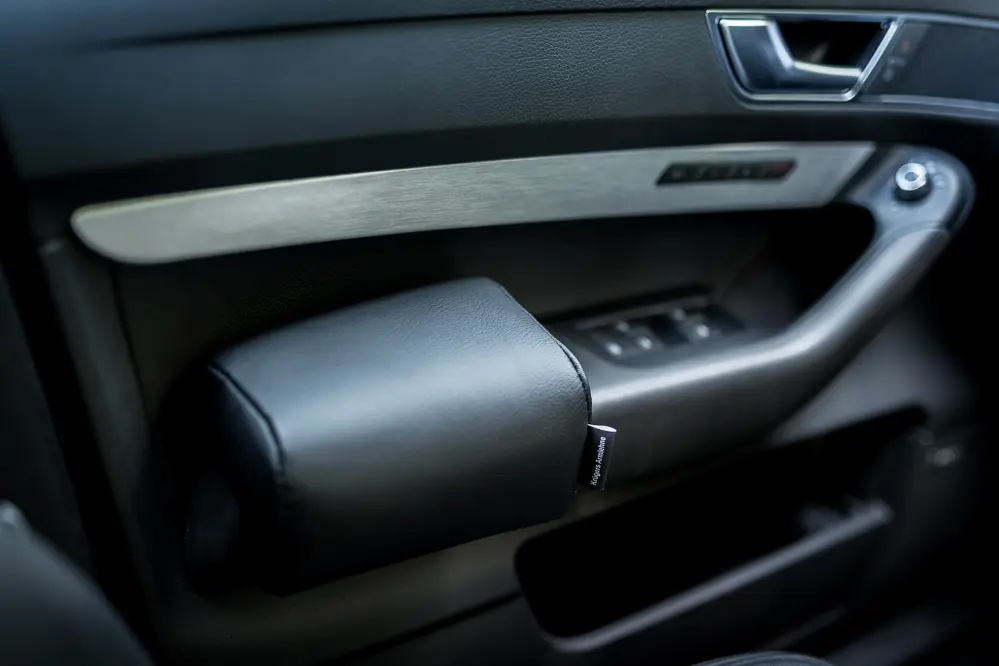
While exercises and posture corrections provide short-term relief, the armrelaxpad addresses the cause directly at the root. As a custom-fit, soft cushion for the door armrest, it closes the annoying gap between arm and door.
Thanks to the ergonomic padding, your arm rests at exactly the right height. The result: your spine stays upright, your neck relaxes, and you master even hours of highway driving completely pain-free.
Frequently Asked Questions About Shoulder Pain While Driving
Does the armrelaxpad fit every vehicle model?
Yes, the armrelaxpad was designed with a universal fit. It can be flexibly attached to the interior door trim of almost all common passenger cars, SUVs, and trucks – without any tools or permanent modifications to the vehicle.
Can an incorrect armrest height also cause neck pain?
Absolutely. When the forearm is not supported, the trapezius muscle in the neck must constantly hold the entire weight of the arm. This leads to chronic muscle tension that radiates directly from the shoulder into the neck and the back of the head.
How quickly does noticeable relief set in?
Relief for the shoulder and neck muscles sets in immediately as soon as the arm rests horizontally and softly. Many drivers report arriving significantly more relaxed, without the typical pulling tension, after just their first longer highway drive.
What is the optimal angle for your arms when driving?
Ergonomics experts recommend an elbow flexion angle of about 90 to 110 degrees. In this position, muscle tension in the shoulder girdle is at its lowest and optimal blood circulation down to the fingertips is ensured.
Do something good for your health.
 The ergonomic effect:
- As soon as your elbow is supported, muscle tension in the shoulder and neck area drops noticeably. You arrive more relaxed – whether after 50 km or 500 km.
Start traveling first class today. The armrelaxpad can be installed in seconds—no tools required, no hassle.